
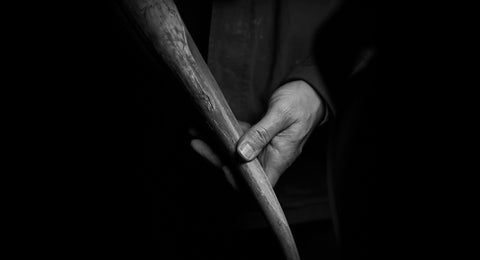
Natural Horn: Materials, Ethics & Craftsmanship
A material born from nature's cycle
At Zanchi 1952, every object begins with a single, defining choice: natural horn. Not as an exotic material, but as something nature provides at the end of an animal's life cycle — a byproduct of the food industry, collected after the animal has lived its full life. Nothing is taken. Nothing is wasted.
This is not a marketing claim. It is the foundation on which four generations of our family have built their craft since 1952.
Ethical sourcing — what it means in practice
The horn we work with comes exclusively from buffalo and ox — non-endangered species sourced from Africa and India. Every batch is selected in full compliance with the Washington Convention on International Trade in Endangered Species (CITES), which governs the international trade of animal-derived materials.
In practical terms, this means:
- We source exclusively from animals raised for food production
- No animal is harmed or hunted for its horn
- All species used are classified as non-endangered under CITES
- Horn processing waste is returned to the soil as natural fertilizer
The result is a fully circular material: a byproduct recovered, transformed, and given new life as a luxury object.
Why natural horn is unlike any other luxury material
Natural horn is not synthetic. It cannot be replicated. Each piece carries its own colours — from blond ivory to deep brown — its own grain, its own curvature. Two horn objects are never identical. This is not a flaw; it is the nature of the material itself.
Horn is also exceptionally durable. It resists moisture, withstands daily use, and develops a distinctive patina over time. Unlike plastic composites or resin imitations, genuine natural horn improves with age when properly cared for.
Handcrafted in Italy — entirely by hand
Working natural horn requires heat, pressure, patience, and skill accumulated over decades. At our workshop in Bozzolo, Lombardy, our master craftsmen shape each piece using fire and manual techniques unchanged in their essence since our founder Giovanni Zanchi began working the material in 1952.
There are no shortcuts. No injection moulding. No automated production lines. Every horn cutlery set, every wine accessory, every desk object passes through the same hands, in the same workshop, following the same process refined across four generations.
Sustainable luxury — a different kind of value
Sustainability in luxury is often a story told after the fact. For us, it was never a choice — it was the only way to work with this material responsibly.
When you purchase a Zanchi 1952 object, you are not buying a mass-produced item finished to look handmade. You are acquiring something genuinely rare: an object that required skilled human hands, sourced from a material that would otherwise be discarded, made in a country with a centuries-old tradition of fine craftsmanship.
That is what ethical luxury means to us.