
Horn Handle Cutlery: The Craft Behind Italy's Most Refined Flatware
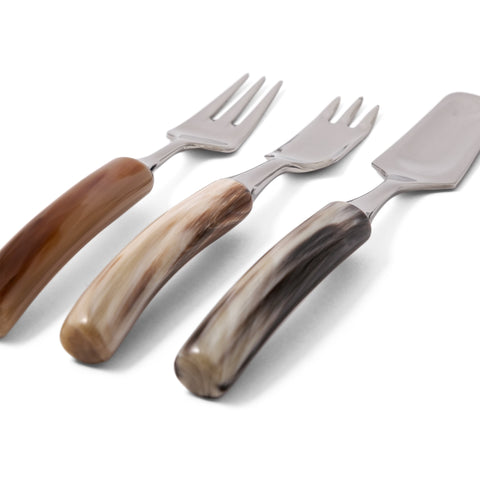
Horn handle cutlery occupies a specific place in the history of fine Italian tableware — it is neither the most formal nor the most minimal option, but it is among the most distinctive. The warmth of natural horn against stainless steel, the slight variation in colour from piece to piece, the weight and balance of a well-made set: these are qualities that silverplate and resin handles cannot replicate. This article explains how horn handle cutlery is made, what distinguishes a well-crafted set from a mediocre one, and why the process has changed very little in seventy years.
Selecting the raw material
The process begins long before any cutting or shaping takes place. At Zanchi 1952, we select and import raw horn directly from Africa and India — buffalo and ox horn sourced as a byproduct of the food industry. When a new shipment arrives at our workshop in Bozzolo, every piece is assessed individually.
For cutlery handles specifically, the selection criteria are strict. The horn must have sufficient density to be cut cleanly and to hold its shape under daily use. The colour and internal grain must be consistent enough within a single piece to produce handles that read as a coherent set — while still carrying the natural variation that makes horn distinctive. Pieces that do not meet these criteria are set aside for other applications or discarded.
This selection process is not something that can be automated or accelerated. It is a judgement call made by experienced hands, informed by decades of working with the material.
Cutting and shaping the handles
Once selected, the horn is cut into blanks — rough sections slightly larger than the finished handle dimensions. These blanks are then softened using controlled heat, which makes the material workable without cracking or discolouring it.
Each blank is shaped manually around a form that corresponds to the handle profile. The horn is held under pressure as it cools, setting into the desired shape. For our cutlery handles, this shape is designed to follow the natural curvature of the horn — working with the material's own geometry rather than against it. The result is a handle that feels balanced in the hand and that shows the horn to its best advantage.
After initial shaping, the handles are refined through a series of cutting, filing, and sanding stages. Each stage removes a small amount of material and brings the surface progressively closer to the final finish. A well-finished horn handle will pass through ten or more sanding stages before it is ready for polishing.
The stainless steel components
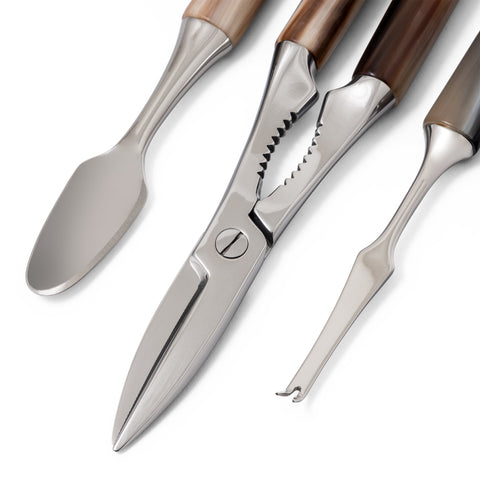
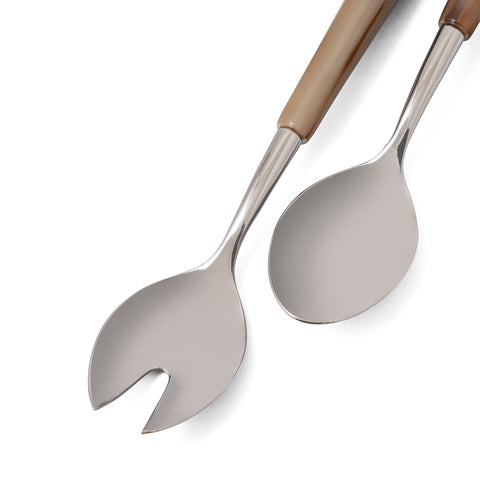
At Zanchi 1952, the metal components of our cutlery — blades, tines, and spoon bowls — are produced in stainless steel and finished by hand before assembly. We do not use electroplated silver or silver-effect coatings, which wear over time and require specific maintenance. Stainless steel is durable, dishwasher-safe on its own, and maintains its appearance indefinitely with normal use.
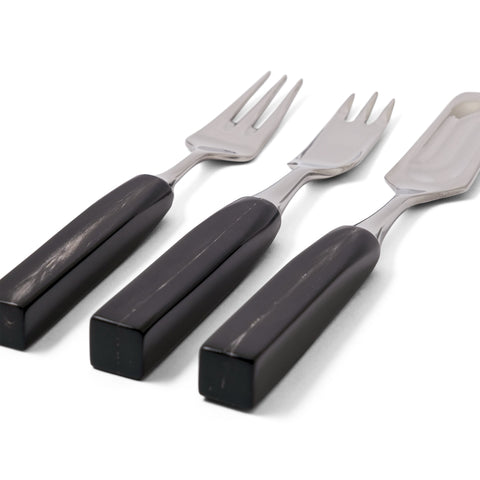
The connection between the horn handle and the stainless steel component is a critical point in the construction of any piece of cutlery. At Zanchi 1952, this joint is designed and executed to be permanent and invisible — the steel is set into the horn and secured in a way that does not rely on adhesives alone, ensuring that the handle will not loosen with use or washing.
Polishing and quality control
The final polishing of the horn handle brings out the natural lustre of the material and reveals the internal grain in full. This stage transforms what was a rough, opaque blank into the warm, translucent surface that characterises a well-finished horn object.
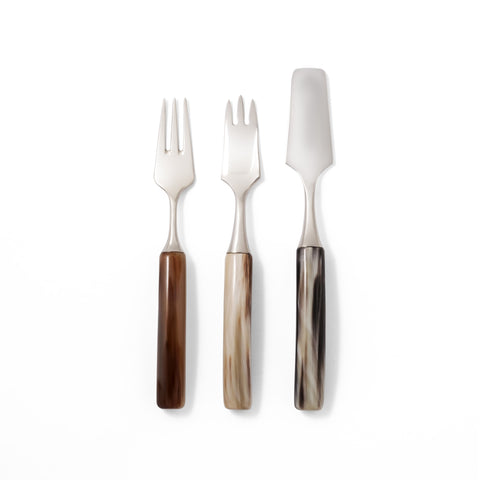
Every finished piece is inspected individually before it is included in a set. Sets are then assembled by matching pieces for colour range and grain character — ensuring that a six-piece or twelve-piece set reads as coherent while still showing the natural variation that makes horn distinctive. No two sets are identical.
How to care for horn handle cutlery
Horn handle cutlery requires slightly more attention than all-metal flatware, but the care routine is simple once established.
The horn handles should never be placed in a dishwasher. The combination of high heat, prolonged moisture, and detergent will damage the surface of the horn and may loosen the connection between handle and blade over time. Hand washing with warm water and mild detergent, followed by immediate drying, is all that is required for regular maintenance.
For objects that see frequent use, an occasional treatment of the horn surface with a small amount of petroleum jelly or natural wax will keep the material supple and maintain its lustre. This takes less than a minute and should be done every few months under normal use.
Stored correctly and maintained with basic care, horn handle cutlery will last for generations — and will develop a patina over time that makes it more beautiful, not less.
Our cutlery collection
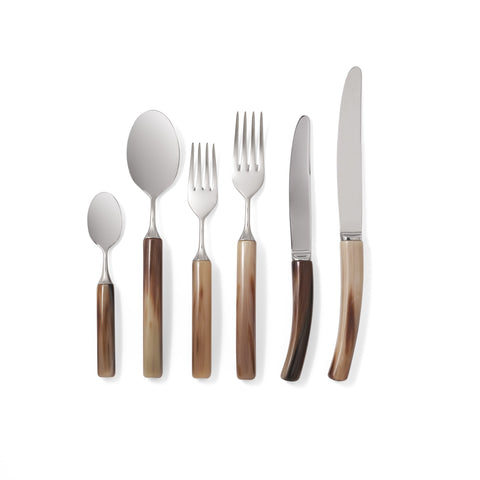
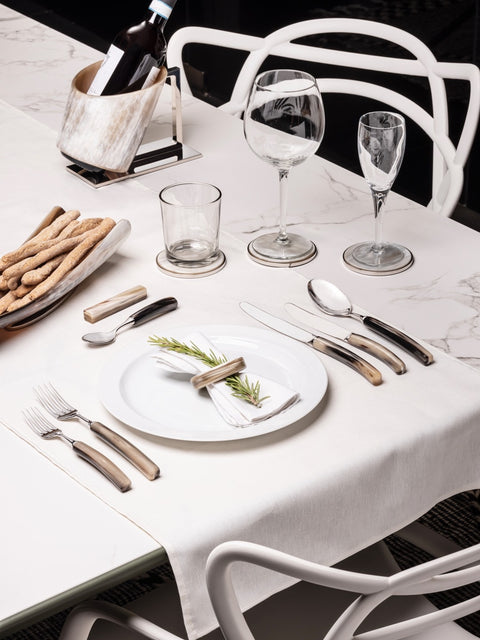
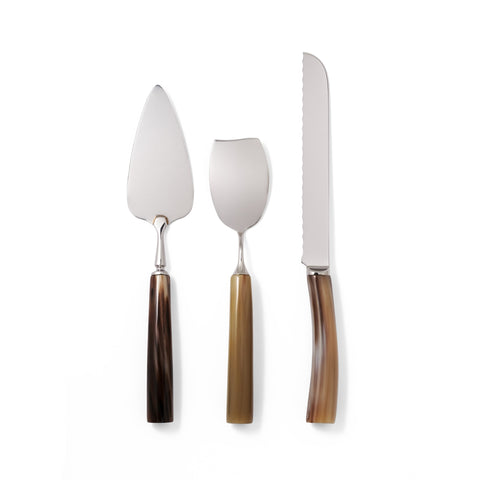
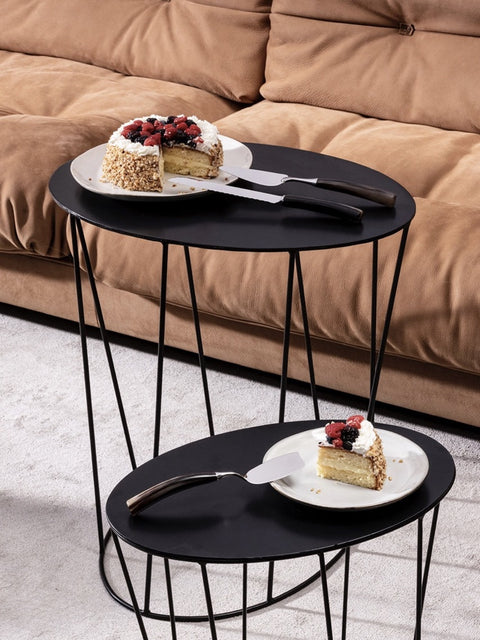
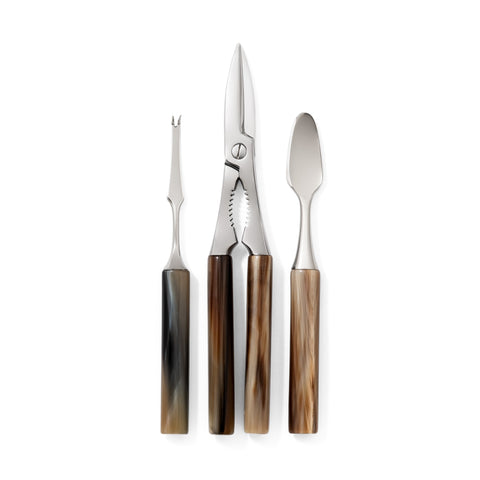
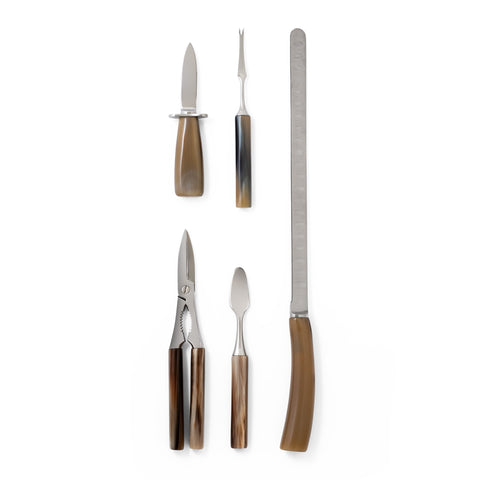
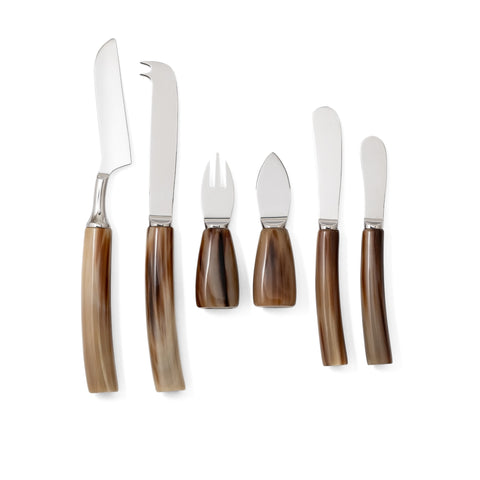
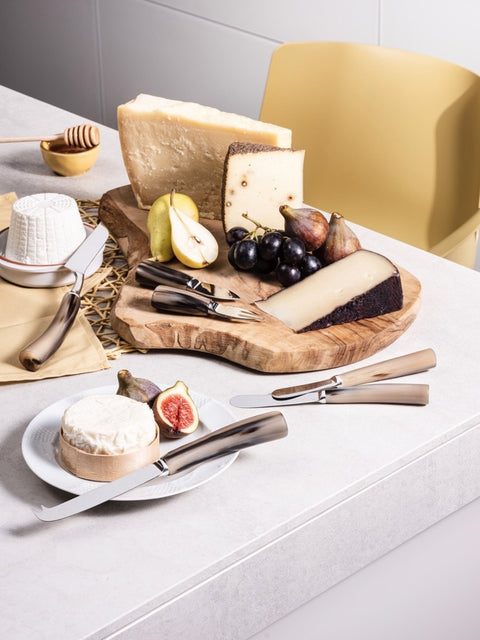
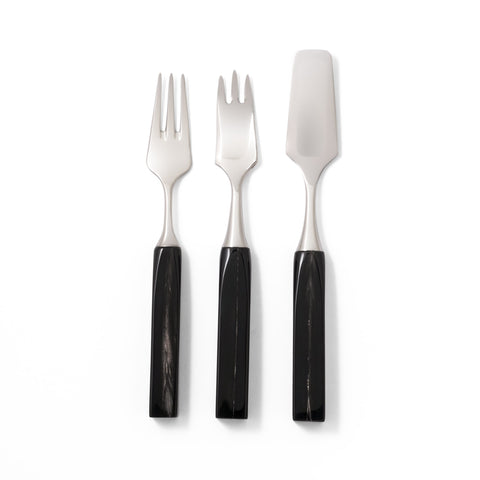
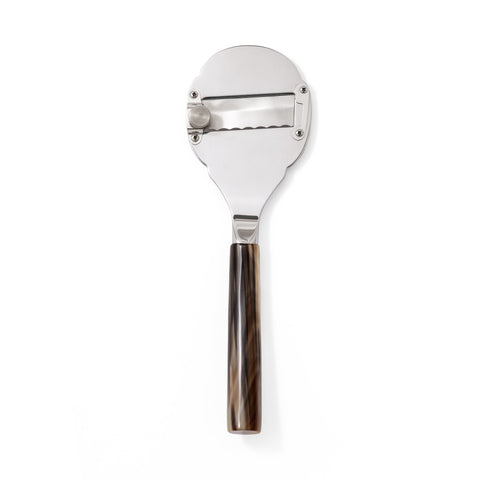
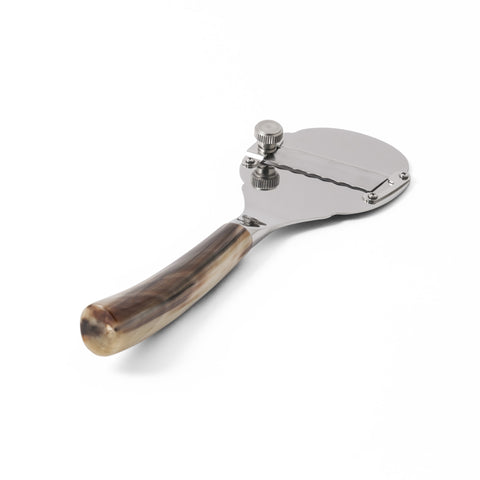
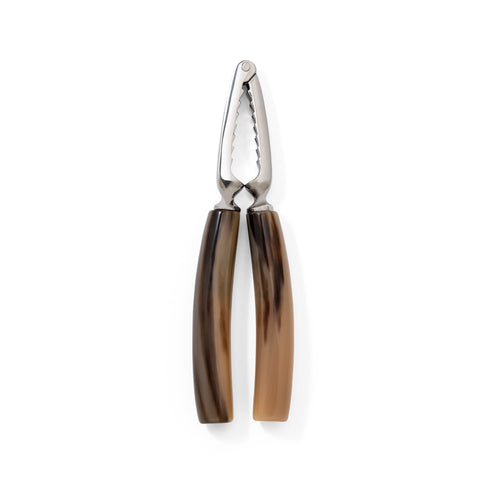
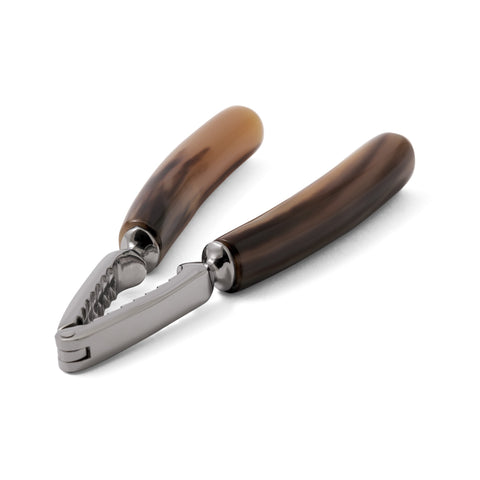
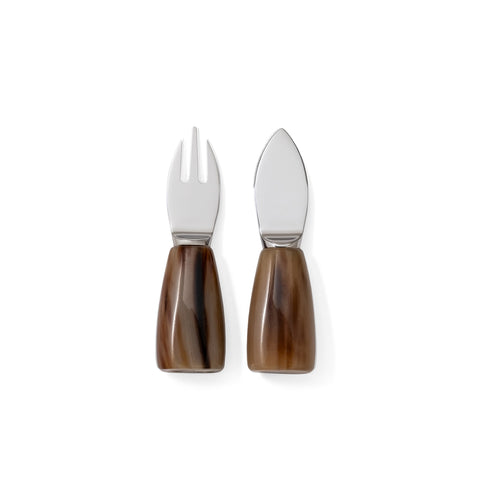
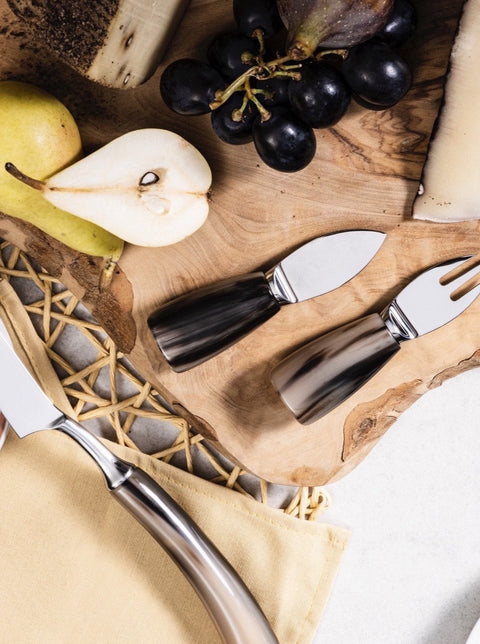
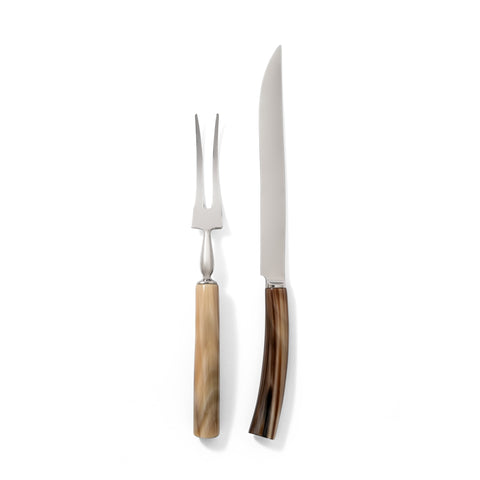
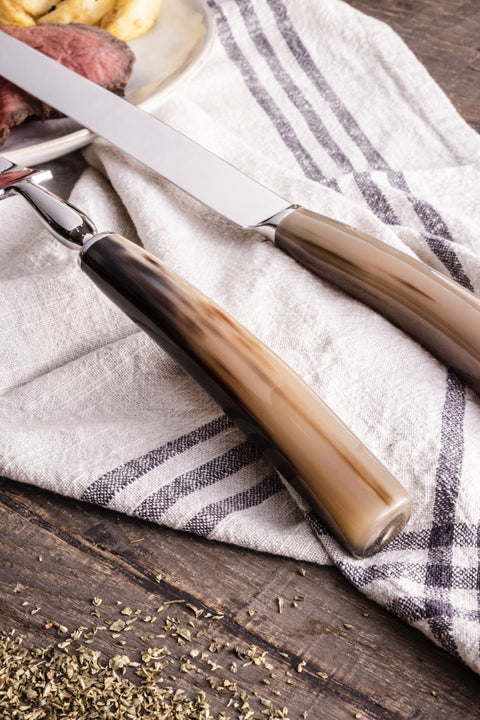
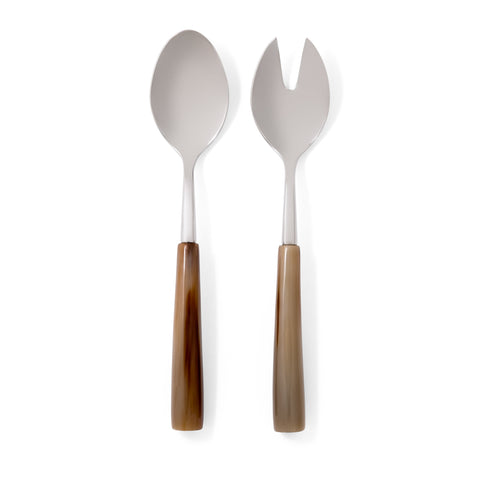
Zanchi 1952 produces a complete range of horn handle cutlery for the table — from classic table settings to specialist pieces for fish, cheese, truffle, dessert, and carving. All pieces are available individually or as sets, and can be customised on request in terms of finish and metal specification.
Explore our full cutlery collection, or contact our Shopping Concierge for guidance on selecting the right set for your needs.